
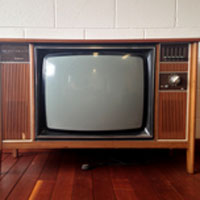
Television has long been responsible (read blamed), for pointing consumers into a certain direction. The epitome of where a successful company’s advertising was expected to be. Ironically, you had to be successful first in order to afford this luxury.
 TV is still a major medium, with broadcasters also working to improve business models to make TV Ad Spend less demanding. Web advertising, however, has been rightly recognized as a faster, further reaching method. So much so that for 2013, Nielsen reported a 32.4% rise in internet display advertising while TV advertising saw a growth of only 4.3%.
Companies are always looking to optimize their marketing mix, and return on ad spend must justify the budget. To ignore Digital will be naive, a study also conducted by Nielsen, where advertising budgets were shared in differing degrees (between TV and Digital) with Digital afforded between 0% to 15% of the total budget, there were a few key findings:
- Television and Digital proved to be an effective combination with advertising reach increasing relative to the inflation of Digital budget.
- The increased digital budget also led to decreased cost per view
- Brand recall was enforced when online video was released prior to the Television debut
If the study continued to increase the Digital Budget, then (in theory), the reach will increase, cost will decrease and TV ad spend will eventually become zero. But let’s not get ahead of ourselves, as in South Africa, there are more TV watchers than web surfers.
At a time when quantifying the success of an online campaign was almost non-existent, the orthodox marketer could swear by the success of television advertising, but now with business intelligence and analytics at the heart of Digital Marketing, its easier to tune in to what it may have to offer.
{jcomments on}